RPZ and backflow engineering for NYC DEP applications
When NYC DEP asks a building for a backflow preventer, the application needs an engineering report signed by a New York PE. Concord prepares the report and the DEP package for RPZ, DCDA and DCV devices, and handles the DOB filing for the riser drawing when the job needs one.
Updated
What we design
- Engineering Report for Water Use, with hazard classification and device selection
- Reduced-pressure-zone (RPZ) assemblies on domestic water services
- Double-check detector assemblies (DCDA) and double-check valves (DCV), including fire-line conditions on sprinkler and standpipe services
- DEP cover letters and forms
- The plumbing or sprinkler riser drawing that the DEP application relies on
- Related DEP work: site and house connection proposals (SD-1/SD-2) and hydrant flow tests
What’s included
- Review of the DEP notice or order and the existing water service
- Engineering Report for Water Use: hazard classification, device selection, fire-line conditions where a sprinkler or standpipe service is involved, and the testing paragraph
- DEP cover letter
- The approved plumbing or sprinkler riser drawing, attached to the package
- Report signed by a New York licensed Professional Engineer
- Refiling with the device test report after installation, as Concord did for a Hillside Avenue job in Queens in 2023
NYC DEP rules we work to
- NYC DEP reviews backflow (cross-connection control) applications separately from the Department of Buildings.
- The engineering report (the Part C report) must be signed by a New York State licensed Professional Engineer.
- DEP relies on an approved plumbing or sprinkler riser drawing. When the building has none, Concord handles that filing too.
- A licensed plumber installs the device. A New York State certified backflow tester tests it after installation and every year after that, and the results are filed with DEP.
From DEP notice to tested device
- 01
Notice and survey
Review the DEP notice or order, the water service, the meter area and any existing riser drawings.
- 02
Engineering report
Classify the hazard, select the RPZ, DCDA or DCV device and write the Engineering Report for Water Use, signed by a New York licensed Professional Engineer.
- 03
Riser drawing
Confirm the plumbing or sprinkler riser that shows the device is approved, or prepare and file it first.
- 04
DEP submission
Submit the report, the DEP cover letter and the approved riser to DEP, and answer DEP's comments.
- 05
Install, test, file
A licensed plumber installs the device, a certified backflow tester tests it, and the test report is filed with DEP.
From Concord's backflow jobs
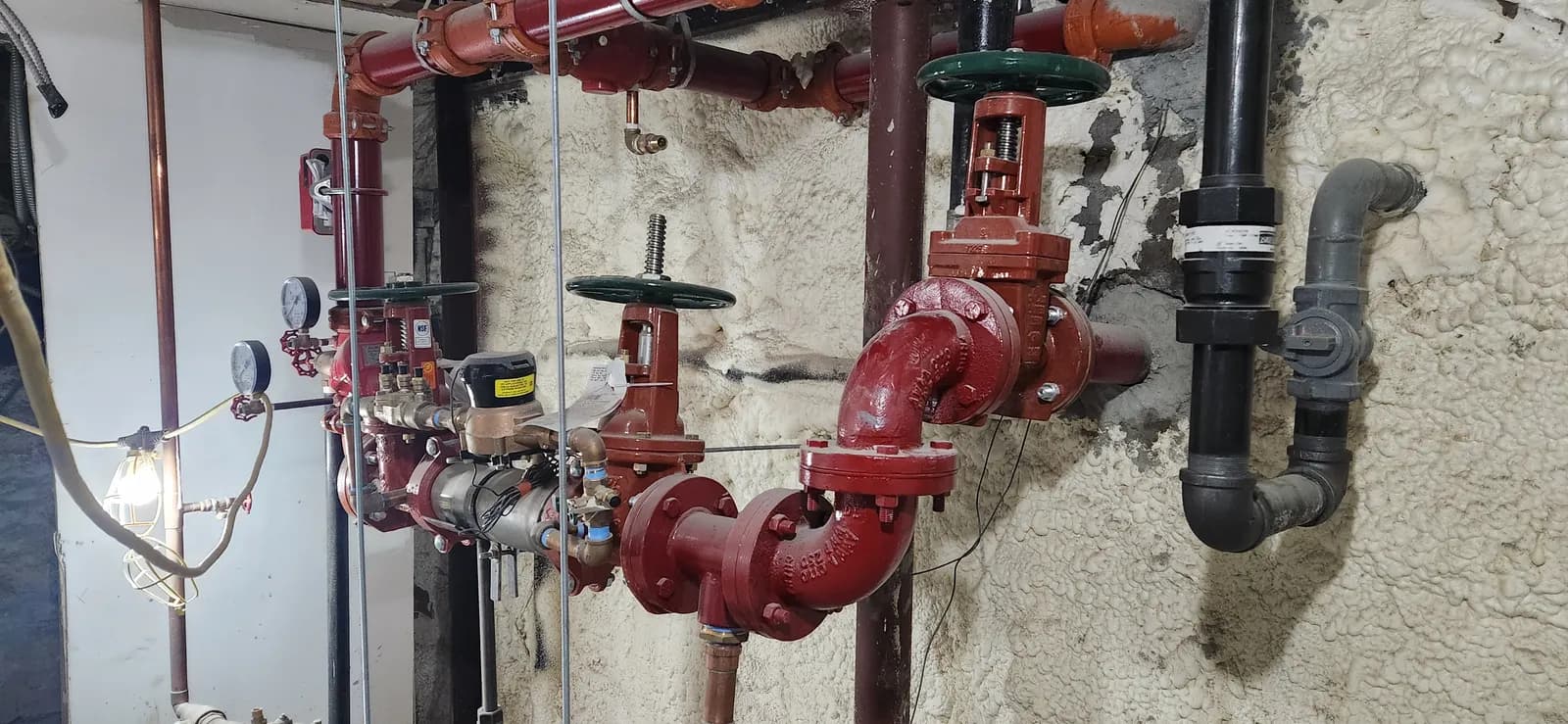
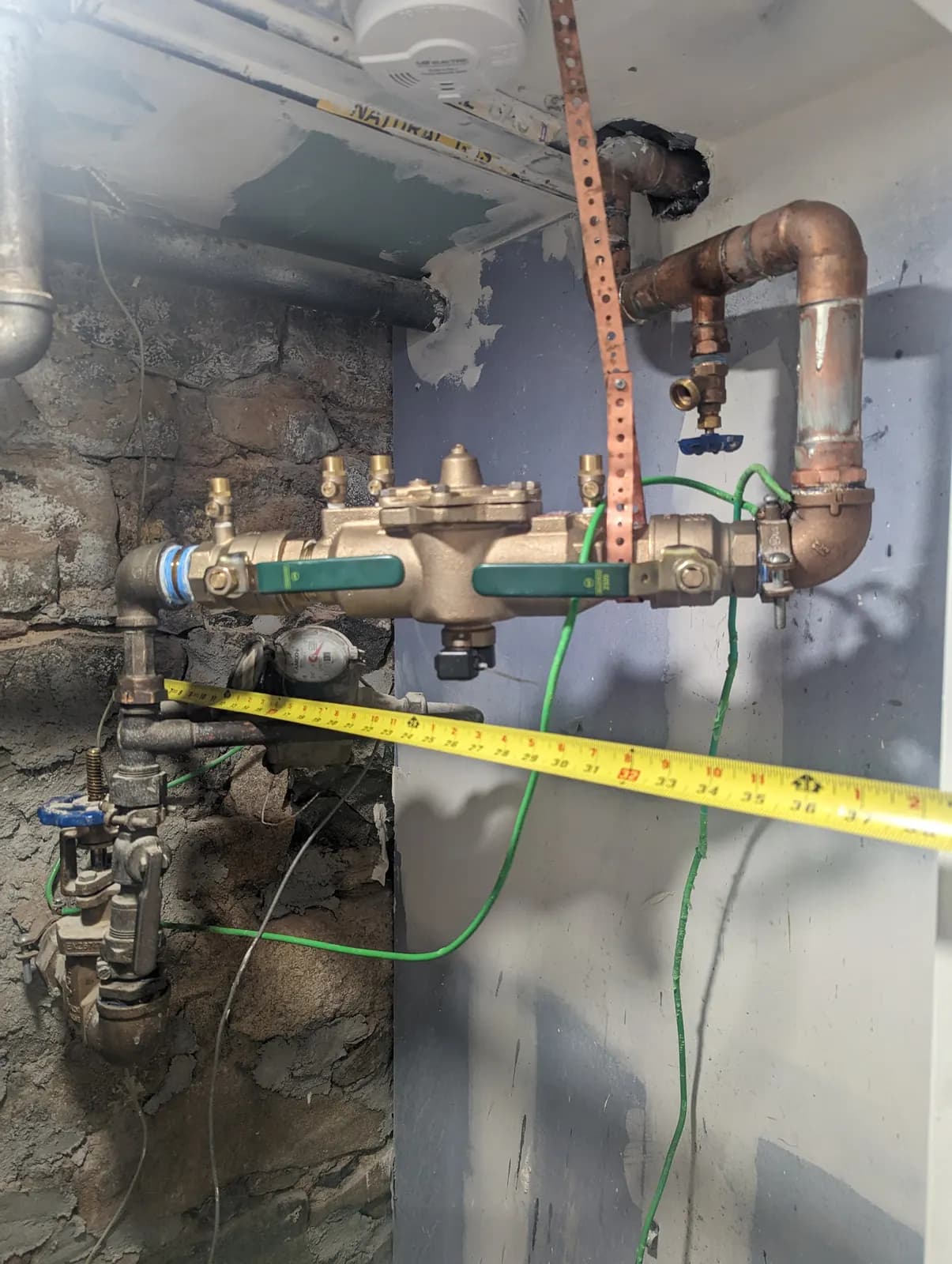
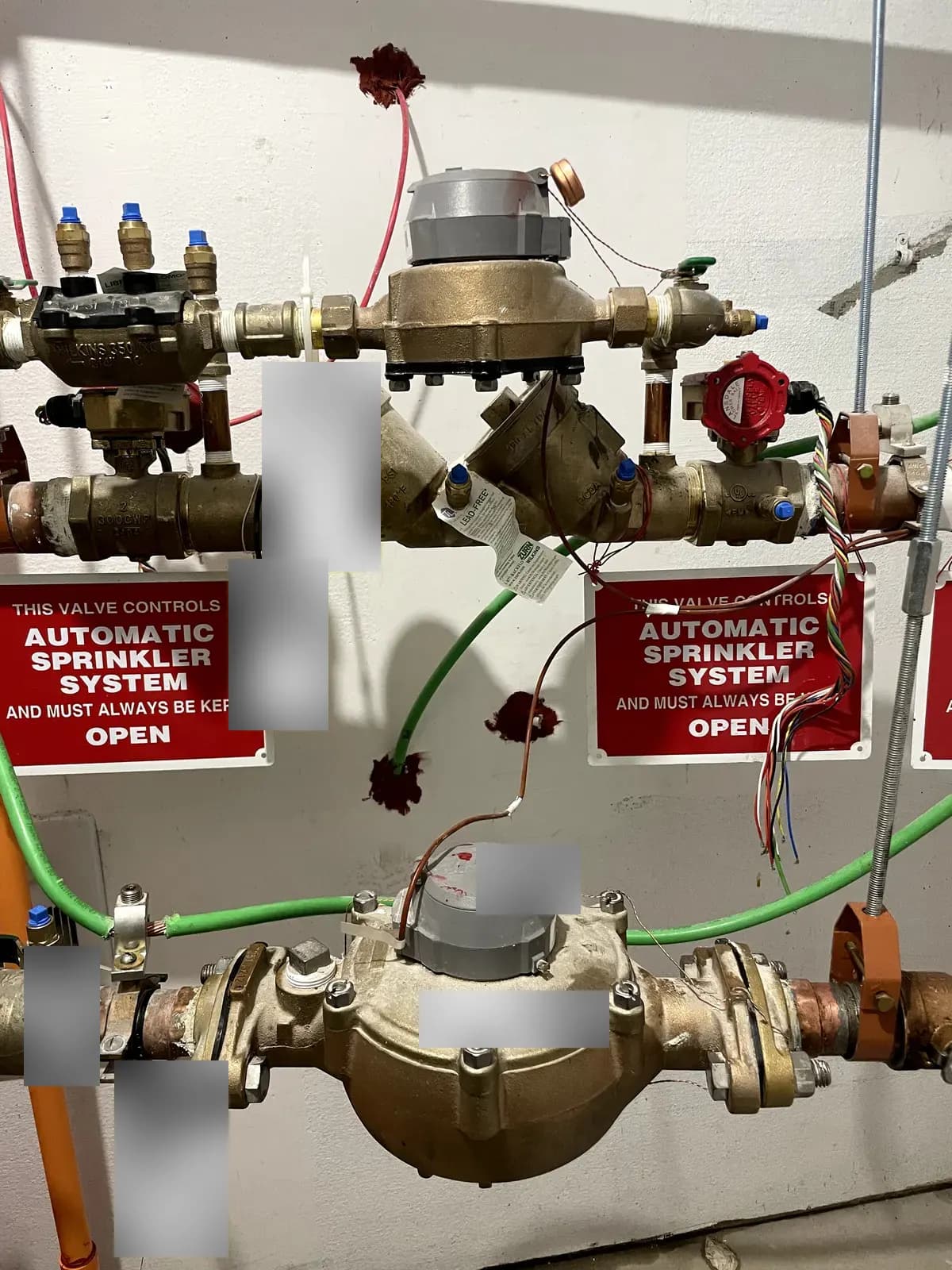
RPZ & DEP Backflow: projects by borough and county
What does Concord prepare for a NYC DEP backflow (RPZ) application?
Concord Consulting Engineering PC prepares the full DEP cross-connection package for RPZ, DCDA and DCV devices. It includes the Engineering Report for Water Use, the DEP cover letter and the plumbing or sprinkler riser drawing that shows the device. A New York licensed Professional Engineer signs the report.
Common questions
Who can sign a NYC DEP backflow (RPZ) application?
The engineering report in a DEP cross-connection application, the Part C report, must be signed by a New York State licensed Professional Engineer. Concord's reports are signed by a New York licensed Professional Engineer. The signed report goes to DEP with a cover letter and the approved plumbing or sprinkler riser drawing that shows the device.
Does a DEP backflow application need a riser drawing?
Yes. A DEP backflow application relies on an approved plumbing riser, or a sprinkler riser for a fire line, that shows the device, and the drawing is attached to the DEP package. If the building has no approved riser for the work, Concord prepares and files it, so both can be ready together.
RPZ vs DCDA: which does my building need?
The engineer's hazard assessment decides. In general, a reduced-pressure-zone (RPZ) assembly is used where the hazard is high, for example as containment on a domestic water service. A double-check detector assembly (DCDA) is typically used on fire lines that feed a sprinkler or standpipe system. The Engineering Report for Water Use records the hazard classification and the device selected for each service.
What happens after DEP approves?
A licensed plumber installs the approved device. A New York State certified backflow tester then tests it, and the test report is filed with DEP. The device has to be tested again every year, with each result filed with DEP. How long approval takes depends on DEP's review and on whether the riser drawing is already approved.
Does Concord install or test the device?
No. Concord is the engineer. It prepares and signs the engineering report and assembles the DEP package. A licensed plumber installs the device, and a New York State certified backflow tester tests it. Concord does not offer expediting. Plumbers and testers who receive a DEP order can bring Concord in for the PE-signed report.
What should I send with a DEP backflow notice?
Send the DEP notice or order, the building address, any existing riser drawings, and photos of the water service and the meter area. With these, Concord can review the service, check the riser drawings, and tell you what the DEP package will need before any design starts.
Got a DEP backflow notice?
Send the notice, the address and a few photos of the water service. Concord prepares the PE-signed report and the DEP package.